On this page
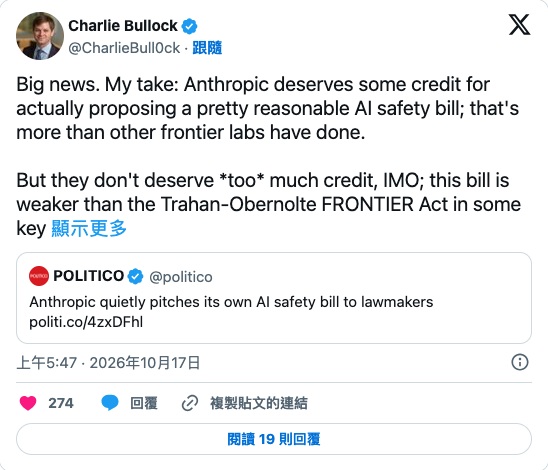
On 10/21, Anthropic CEO Dario Amodei posted a long piece on X responding to public criticism of Anthropic from AI safety advocate Nathan Calvin.
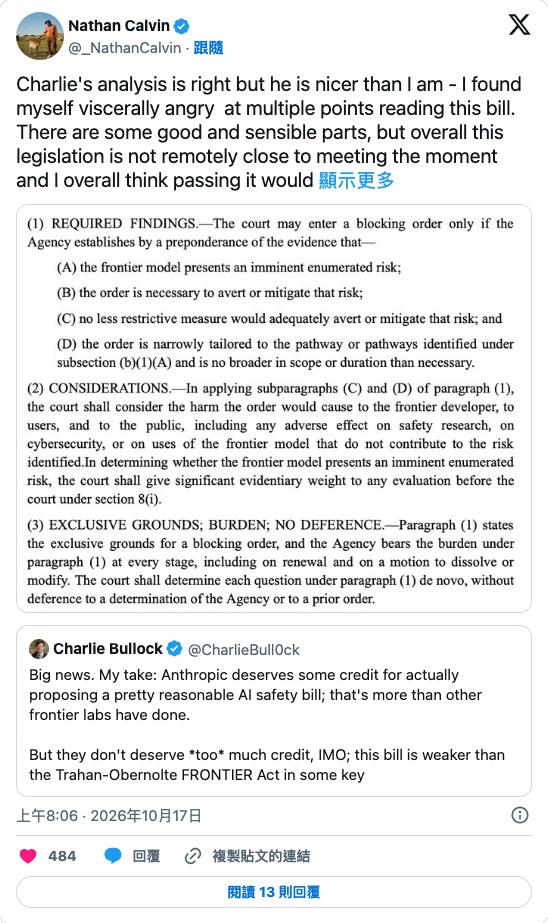
The back-and-forth went on for almost a week, and it started with a draft bill.
Want AI working in your own job, not just in demos? See the 3-month 1-on-1 program →
10/18: Anthropic’s head of federal affairs responds
Anthony Cimino, Anthropic’s head of federal affairs, responded. The main points:
- The draft translates the Advanced AI Framework they proposed in June into legislative language, and was only shared with a few congressional offices for discussion
- The state-preemption language will be revised so states keep more of a role
- On the threshold for blocking a model, they want to balance “courts can act fast in an emergency” against “this power must not be abused”
- The risk threshold is lifted straight from California’s current law
- They admit that after this summer’s incident, the proposal still needs strengthening
10/19: Nathan asks what Anthropic actually is
Nathan replied with an even longer post. This time he skipped the bill text and asked directly: what is Anthropic, really?
He offered three answers:
- A tech giant making its employees and investors rich (the rumored IPO target is $2 trillion, bigger than Meta)
- An AI safety organization
- An organization bent on being first to build superintelligence that can do its own research on the next generation
He said the behavior visible from outside fits the third best, and listed nine things: building its own chip team, compute contracts worth more than $500 billion, Claude-led AI development tasks going from 0% to 26%, RSP v3 dropping the commitment to pause if safety can’t be assured, setting up a separate non-binding compliance framework, a letter to Congress that was later withdrawn, and this bill.
His sharpest question: if these were all mistakes, why do the mistakes always lean in Anthropic’s favor?
10/21: Dario responds himself
He started by admitting some of the examples really were mistakes, and said big companies should get yelled at every day.
But he disagreed with the overall argument. The core of it is their long-standing “race to the top”: you have to stay at the frontier to have the influence to pull the whole industry’s standards up.
He also listed nine safety decisions they made even though they cost money. A few of the more concrete ones:
- The biosecurity classifier is so strict that biologists joke about it, and competitors use “we’re less strict” to win customers
- They had a Mythos-class model in February but waited until cybersecurity protections were in place in June to open it fully, giving it only to a few partners for cyber defense in the meantime
- They’re the only frontier lab that bans selling AI services to Chinese-controlled companies
- This week they announced putting 5% of the company’s equity into a public-benefit fund
On Nathan’s nine points, Dario took them in groups:
- Chips, compute, and automated AI research: he sees these as simply what staying at the frontier involves. Opposing them means opposing the whole strategy
- The letter to Congress, “you can’t do safety from second place,” and the bill: he admitted these were handled badly, said that with more than 5,000 employees information doesn’t move between teams fast enough, and that as CEO he takes responsibility
- RSP v3 he called the most substantively contested point. The old version was too rigid, and when it launched in 2023 they said it would iterate quickly
- On the separate compliance framework, he said they’ll look at it again and may not have weighed it well
His last line: they’ll explain soon how Anthropic plans to live up to its values at this fast-moving moment.
If you want to follow Anthropic news like this yourself, I put together three channels earlier: official sources, employee accounts, and third-party breakdowns. It also covers the controversy around the Mythos system card: Three channels for tracking Anthropic.